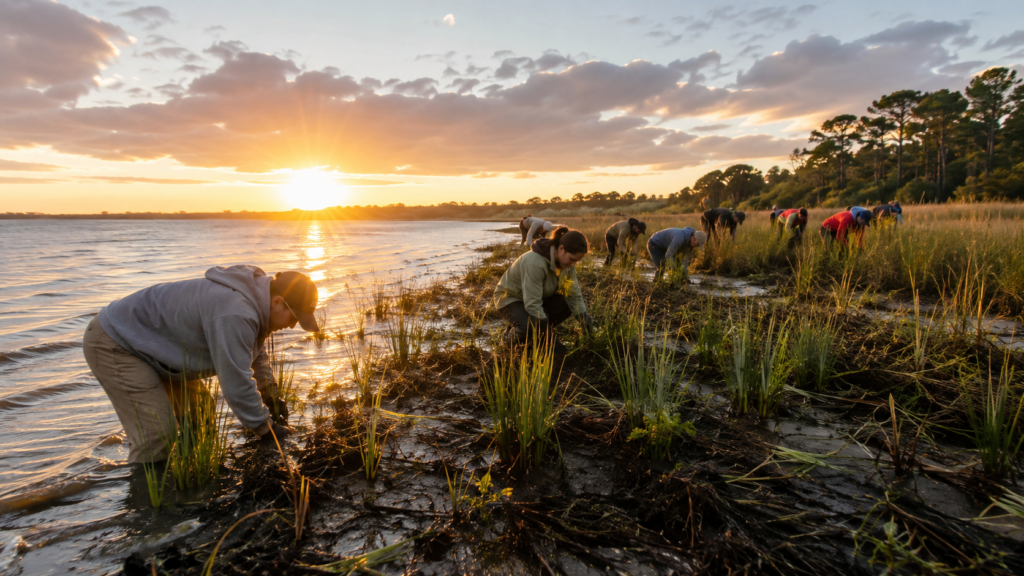
Photographs taken across months can show wetland recovery that is almost invisible during a single visit. The most useful reporting begins with a narrow question and expands only when evidence supports a wider conclusion. That discipline helps readers understand not just what happened, but how decisions, institutions and everyday choices produced the outcome.
Interest in long-term environmental photojournalism is growing because of repeat photography, drone perspectives and collaboration with local conservation teams. These tools make it easier to find patterns and reach people whose experiences were previously treated as background detail. Technology can accelerate the work, but it cannot replace observation, careful interviews and an editor willing to challenge assumptions.
The story matters directly to scientists, volunteers, fishers and residents living near the coastline. Each group sees only part of the system, so strong reporting compares accounts instead of selecting the most convenient voice. Differences between memories, documents and official statements are not obstacles to hide; they often reveal where further questions are needed.
Reporters also have to explain their methods. Readers should know when information comes from direct observation, a database, an anonymous source or an expert interpretation. Clear attribution allows the audience to judge the strength of a claim and separates verified facts from reasonable but still uncertain conclusions.
Powerful images can oversimplify ecological change if captions omit uncertainty and setbacks. Responsible journalists address this limitation by seeking additional sources, preserving notes and correcting the record when new evidence appears. They also consider whether publishing a detail could create unnecessary harm for someone with little power over the wider situation.
Time is another essential ingredient. A brief visit may capture emotion but miss the routines that make a place understandable. Returning at different hours and seasons shows which problems are temporary, which relationships endure and which public promises lead to measurable change.
The next stage will likely bring visual stories that document both improvement and the work still required. Sustainable reporting will depend on cooperation among specialist journalists, local contributors and audiences who value patient work. The goal is not to create the loudest account, but the clearest one that available evidence can support.
For readers, trustworthy reportage offers details that can be checked, voices placed in context and conclusions that do not outrun the facts. For journalists, the standard remains demanding: listen closely, verify independently, disclose uncertainty and keep following the story after public attention moves elsewhere. This approach gives communities a more accurate record and creates a stronger basis for public discussion.